Expression and Passion: Acknowledging Autism Through Creativity
It is never planned for; it is rarely expected, but when the reality of such circumstances becomes clear, the lives of those it affects may never be the same.
Autism Speaks, but sometimes it doesn’t utter a word in its infancy, only emerging after time to announce its presence.
This wasn’t the case for my brother Ryan, as it wasn’t overtly obvious that he had autism in his youth; it only became clear something was amiss as he entered his teens.
“I was told about it years ago, but I didn’t grasp the concept until recently,” he says, clutching his translucent green binder that contained the very essence of his existence.
Growing up, he was the quintessential happy youngster with boisterous brown eyes, almond brown hair, and the kind of overpowering smile that bends you to its will, demanding joy and happiness in even the worst of circumstances.
Those were the innocent times. I can recall the many Christmases in which we sat beneath the tree as children. We always sat from left to right, myself glancing over the small instruction manual to a newly gifted Jungle Treasure Adventure Lego set, my youngest brother Spencer rearranging the pose of his new Superman figure and Ryan sitting to the far right over by the curio cabinet turning the pages of his new The Lion King coloring book; slightly bending the pages as he mashed the corner together to turn the page.
That was a simpler time, a time when kids could be just kids, a time when we could wash away any worries our young minds had with every new episode of Hercules: The Legendary Journeys. But as with childhood, those times don’t last.
Only those times didn’t last as long as they should have. The harsh reality of the real world broke through the barrier of childhood much sooner than is fair.
It wasn’t completely obvious at first, but as time went on, the subtle differences in personality that might have been obscured as a child became ever more apparent with each year.
Ryan would seem more distant and less engaging. He would seem as if he were always engaged in some sort of titanic clash with his own mind, with every thought and word spoken. His eyes would wander, and that same boisterous, welcoming gaze that had once occupied his eyes was now vacant, replaced with a hyperactive, almost robotic stare.
His speech became rushed, his temper erratic, he would be reduced to ticks and jerks if his mind didn’t approve of what he did or said. He had become a victim in his own body, his own mind. He was paralyzed by an illness that we had not known had afflicted him.
This was Autism, the same social disorder that has affected millions.
Ryan’s teen years, which are normally a difficult time of reflection and realization for people to discover who they feel they are, were amplified for Ryan.
This was to be the most difficult time in a life that would guarantee periods of difficult events to overcome. This was a teen period that didn’t involve donning all black and listening to heavy metal as a means of rebellion; it was a time of finding a school that suited his needs, finding the proper doses of medication that would quell a myriad of symptoms that plagued him.
And these were no ordinary medications. Like a chemist balancing certain concoctions and chemicals, the perfect dosage always seemed just outside of reach, like Sisyphus pushing a giant boulder up a never-ending hill. Either Ryan was tortured by his inner demons that demanded his attention at every moment with too little, or he was rendered a lifeless husk, more suitable to George Romero’s Night of the Living Dead with too high a dose.
It was a difficult time to endure, either seeing your brother sit rocking back and forth in his chair, battling his thoughts, or he was rendered comatose, lying in bed for what seemed like all hours of the day, barely able to gather enough cognitive function to look you in the eye and recognize you.
In its worst stages, amplified by the normal growing pains of life, Ryan would feel compelled to strike himself in fits of frustration at his inability to ignore thoughts and would frequently find himself compelled to run away, nearly accomplishing that goal on three separate occasions.
But difficult times don’t always last. And after a long, drawn-out process to secure financial security, and Ryan entering his twenties, things began to change.
Ryan began to rediscover the things from his youth that had captivated him as a child. As a group of three tightly knit brothers, all with similar interests, certain memories from his past that bore the nostalgic comfort of that old dusty painting in the corner began to reemerge.
The old days in which we sat in the back room watching the classic Universal Monsters like Dracula, Frankenstein, and the Wolfman, each with our little stuffed versions to suit. Ryan fancied the monster, I showed an affinity for the suave and aloof vampire, and our youngest brother Spencer took to the beastly werewolf. We each had our own monster to represent us, and we spent countless hours watching the vast library of famous monsters.
“They were cool, and they were the standout black and white movies of the time in comparison to other movies of Hollywood’s Golden Age, in my opinion,” said Ryan as he sat watching a documentary on the history of the Universal legacy.
But it didn’t end there. An entire childhood that was filled with the three of us enjoying films and television uncommon for people our age such as the classic comedy duo Abbott and Costello, the iconic 80’s comedy “Alf”, the constant battles between Archie and Mike aka “Meathead” in “All in the Family” and the snooty and obtuse psychiatrist Dr. Frasier Crane in arguably the greatest sitcom ever “Frasier”. These were moments that belonged to the three of us. They could never be taken away, they were the memories that provided a numbing cathartic escape from the pains and struggles that often threatened to overwhelm Ryan in particular.
For Spencer and me, these childhood memories helped mold the people we became; they became the youthful escapades that played a role in the people we eventually discovered we felt we were as teens. It guided me to my passion to write, it guided my brother towards his passion for music.
But for Ryan, it was much more. For Ryan, it became his salvation; it became his outlet to escape from the traumas that had haunted him for so long. It became a tool to empower him.
Ryan’s creative outlet opened doors long since closed during childhood. Ryan began to watch his favorite monster movies once again, he began to watch new films, and he revisited the old television shows that once provided childhood glee.
He began to watch new forms of entertainment, and he became familiar with creators on YouTube who shared his passions, such as film and culture critics like “The Nostalgia Critic” Doug Walker, Chris Stuckmann, and “The Angry Video Game Nerd” James Rolfe.
But he didn’t just watch, he listened.
Music, like other forms of creative expression, became another crutch to assist him. Ryan ventured deep into the vast cinematic libraries to discover the many talented composers who supplemented the films that he held so dear. James Horner, John Williams, James Newton Howard, Thomas Newman, Danny Elfman, and Frenchman Alexandre Desplat all became common tenants in Ryan’s iPod.
“I got into film music and soundtracks after I listened to the orchestral score of a Scooby Doo film, after that I was hooked,” says Ryan.
The film was “Scooby-Doo and the Witch’s Ghost”, all the way back in 1999.
Ryan, now in his twenties, wanted to take the next step in his evolution. Now he wanted to create.
And so he did.
Fascinated by the beauty and playfulness of Irish mythology and art, and in relation to his own Irish heritage, Ryan developed the concept of “FINN” which “is a Celtic fairy tale in the style of JRR Tolkien’s Lord of the Rings, and set in an alternate version of Ireland which is depicted as its own world with various magical elements and creatures, some based on real mythology, others were created to add to the mythos,” said Ryan as he read through his work.
“Aside from the main character of Finn, there is his seven-year-old younger brother named after me, who happens to have autism. It wasn’t my own disability that inspired me to create the character of Ryan, but a character named Julia, a child muppet with the same disability that recently was added to the Sesame Street series,” says Ryan. The inclusion of Julia in the children’s show, although long after Ryan’s days of watching it, brought him a great sense of joy that inspired him.
Ryan, who one day hopes his film will bear the logo of Disney above its title, believes that his idea will be a trend-setting development for the legendary film company, “The Walt Disney Company has never really introduced autistic characters in their animated films, or any other film for that matter so this is a unique first for the company,” says Ryan.
The great expanse of the universe gave Ryan his second idea: “The Planet Gods”.
“The Planet Gods was another big, ambitious project for me; it is a sci-fi/fantasy series made specifically for Universal Studios.”
“The series is set in the far-off distant future after the end of life on earth, the sun is dead, and the world is now an icy wasteland,” Ryan said.
“Eventually, a group of stars comes together to form a new sun as well as a living god Helios, named after the Greek god of the sun, who creates the planet gods.”
“The thing that inspired me was from my childhood, something basic, and something simple, an episode of the Nick Jr show Blues Clues, in one episode Steve and blue jump into a picture of the solar system in their house and along with the sun, they sing the names of the planets, that sparked the idea for me to create the planet gods which for me is a fresh and new idea for a Hollywood production in an era which most films are adaptations, remakes of older movies, and sequels, I wanted to create something new and fresh that could help bring back a sense of wonder, creativity, and imagination to film making in Hollywood similar to what George Lucas did when he made Star Wars,” said Ryan
The lack of representation of Autistic individuals in all forms of media has led to a deeply rooted sense of motivation for Ryan to include diversity in his own projects, not just for Autism, but diversity for all ethnic groups; “Something else I wanted for the series was to include a diverse cast of characters”.
“I have also planned out a whole franchise for this film series, including television spinoffs as well as novels and comics and even merchandise for every single marketing piece and theme park attractions, even a website based on Pottermore.” Says Ryan. Pottermore is a website dedicated to JK Rowling’s Harry Potter franchise. Visitors to the site can take tests to discover where their personalities place them in certain aspects of the Harry Potter universe, such as which House they would be placed in based on their answers.
Through long hours and extensive research, Ryan has ensured that both the historical and scientific accuracy is on point for his Planet Gods creation.
Ryan has crafted a large library of stories and creative themes that he plans to either develop further or complete in the near future. Finn and the Planet Gods have both reached the stage in which the limitations of not having professional assistance to further their creations; they have effectively reached their end stages.
But with the culmination of one idea, another one springs up; that idea is “Ascend”.
“Ascend is a ghost story first set on Halloween night involving a group of trick-or-treaters who enter a haunted mansion where they come across ghost children from long ago who stay there because they refused to join their families in heaven because of past events.”
“The story is an exploration into the psyche, the struggles, and the conflicts between young children and their families, but also has touching moments of friendship when the ghosts were alive; for example there is a flashback sequence told by the ghosts when they were alive during the early twentieth century as they go to a carnival/zoo/circus hybrid, the story is one of my most personal favorites.” Said Ryan.
“Ascend is intended to be my own interpretation of Disneyland’s Haunted Mansion ride, similar to how the 2017 film, ‘The Shape of Water’, was based on the Universal sci-fi horror classic, ‘The Creature from the Black Lagoon”
With each story, there is a significant personal connection tied to where it originated. Every theme of every story connects with Ryan to a significant degree. “Finn”, stemmed from his own cultural heritage and fondness of Irish mythology. “The Planet Gods” originated from Ryan’s interest in space and the universe; his room was outfitted with his own hanging solar system and a large selection of posters ranging from our own “blue marble” to the rings of Saturn.
Ryan’s fourth most passionate project, “Hooves,” is another testament to his passions influencing his creative endeavors. The Horse, a majestic, powerful, and beautiful animal that ultimately represents a notion of freedom, with imagery of them gallantly racing through beautiful plains painted with the lively greens and yellows of grass and flowers. The horse has become a prominent symbol for autism and is a common favorite among autistic individuals.
“Hooves” is no different, according to Ryan. “Aside from being about horses living free in their own environment, it has a story similar to Shakespeare’s play Romeo and Juliet involving two sister horses named Gwen and Beth who meet two brother horses named Jack and Martin as they leave their herds together as they are feuding against each other and the four horses go on a journey in the American wilderness to find a white female ghost horse who will help them end the rivalry between their herds.”
“Like The Lion King, which was based on another of Shakespeare’s plays, Hamlet. There is not a single human being that appears in the film, as nearly the entirety of the characters are horses with the exception of a few other animals, including three comic relief birds, Hickory, Tickory, and Tock,” says Ryan.
As is customary with most of his ideas, Ryan’s next idea is an homage to one of his favorite childhood memories: the cartoon series Charlie Brown, “The Holidays”.
“The Holidays is about a group of elementary school outcasts who form a group and friendship while dealing with their issues of prejudice, but those issues are overlooked when their favorite holidays are celebrated. Like “Hooves”, I wanted the film to be an animated movie for Pixar, but what makes it stand out from most Pixar films is that it is a realistic story.”
Ryan has many inspirations in the filmmaking industry, his favorite among them being Tim Burton. Ryan’s next idea was directly inspired and written with Burton in mind.
“The film is titled “Transition”, it is a science fiction comedy-drama about an alien from a distant planet that resembles a human as he escapes his home when a war breaks out and he takes refuge on planet earth. Because he comes from a different world, the aging process becomes like a slug for him; basically making him immortal as he lives through the many historical eras of time on earth until the finale when he returns to his home planet in the distant future, where he discovers his entire race is dead from the war. The aging process catches up to him, and he becomes old and collapses onto the ground, a reference to the final scene in another film, “The Godfather III,” when Michael Corleone dies of old age,” says Ryan.
“Tim Burton was my inspiration because a majority of his films are remakes of source materials rather than original and fresh and unique ideas like they used to be so I made this film specifically for him to give him a second chance,” says Ryan.
“My next two ideas are not fantasy-based or themed but take place in reality with realistic themes, the first one being “Mothers and Fathers” about two children who fall in love after they tell each other that each of their parents is gay, the boy character has two mothers and the girl character has two fathers who adopted her at birth. Not only is it a romance, but it is a family-oriented film about the heartfelt relationships between children and their parents,” says Ryan.
‘The second realistic story is called “The Linguist,” which I wanted legendary filmmaker Steven Spielberg to direct. It is about an NYU Professor of Linguistics who helps people from different backgrounds address their prejudices. It is mostly told in foreign languages with occasional spoken English,”
“Those are all the current essential film projects of mine that are original, mostly. But I do have some projects in mind that are not really original, as they are either adaptations or remakes. Aside from Irish mythology, I am also fascinated with Greek mythology, with my favorite Greek tale being the Odyssey,” says Ryan.
“For years, I have wanted to make that into an actual film, which hasn’t really been done before, with the exception of the modern re-telling, “O Brother Where Art Thou,” starring George Clooney. Another project of mine that I wanted to adapt that hasn’t had it’s own cinematic adaptation yet is Just So Stories by the author of “The Jungle Book” Rudyard Kipling. That collection of stories is not as popular compared to The Jungle Book, and it’s many adaptations, especially the Disney versions, so it is well deserving of a film adaptation.”
“My final project worthy of mentioning is a tribute to the Universal Monsters and Abbott and Costello, who were both in the same films that I grew up watching. Originally intended as a Broadway musical, “Bud Abbott and Lou Costello’s Scare Show” is an animated homage to their horror comedies from the late 1940s and 1950s. One Universal Monster that is included in the film that never appeared in any of their movies is The Bride of Frankenstein, voiced by famed singer Idina Menzel. There is a scene in the film in which she sings in a 1930’s nightclub, a song called “Standing out from all the Rest” which is reminiscent of other songs she sang from Wicked and Disney’s Frozen.”
“I originally intended to voice the majority of the characters, including the main characters themselves, Bud and Lou, similar to the talented Mel Blanc of Looney Tunes fame. I am good at imitating voices and I could really pull it off. The movie is similar to Hotel Transylvania with the abundance of classic movie monsters but also another tribute from Rankin-Bass of stop motion Christmas special fame, Mad Monster Party
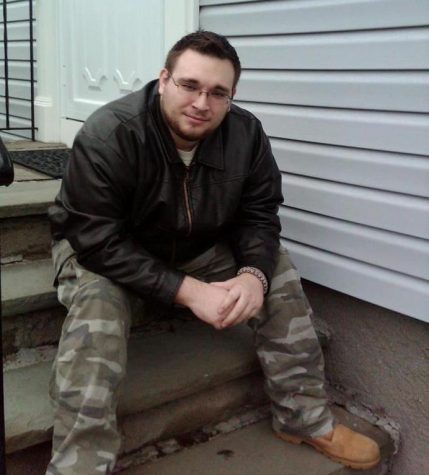
Michael Dunnings, otherwise known by the Hungarian equivalent "Miska", is a native of Dobbs Ferry and a senior studying Journalism at Mercy College. Michael...