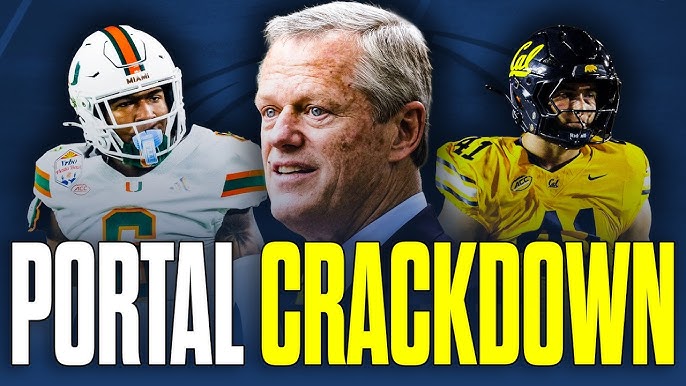
In the National Collegiate Athletic Association (NCAA), the transfer portal provides student-athletes with a gateway to continue their sport if they decide to transfer to another institution. This portal is available in all three divisions within the United States.
There is a lot of controversy surrounding the transfer portal, particularly regarding Division I athletes and NIL deals. Truthfully, the transfer portal is beneficial for athletes at all levels, regardless of outside opinions. The transfer portal is heavily utilized across all three levels of play and supports student-athletes as they pursue college athletics.
Much of the backlash over the transfer portal comes from fans of DI sports like football, basketball, and baseball who watch it on TV. They wear the gear. They debate the team’s moves online.
The NCAA is a non-profit organization that is not affiliated with the government. Recently, there has been much discussion about Donald Trump’s Executive Order regarding the transfer portal and age/time eligibility in college athletics. He claims he wants to “save college sports.” But since the NCAA is a private organization, politics really shouldn’t be involved. If the NCAA wanted to implement those rules, they are more than capable.
Factually, yes, many high-level Division I athletes are transferring for money, and viewers are upset that these 20-year-olds are making decisions about NIL deals and treating the portal like free agency. Though if you were offered thousands of dollars to play a sport and represent a company, wouldn’t you take it? If you could get paid to play a sport, go to college, and have college paid for… wouldn’t you take the offer?
Or transfer to an institution that would give you the most money?
Colleges see students transferring all the time. Sometimes, a school just is not the right fit for someone. This is no different for athletes. Even more so, college athletics can be a major reason for a student to transfer. Athletic programs at the college level can be hit-or-miss. When a school is recruiting athletes, they show all the positive parts and puts on its best. This can draw athletes into a false reality.
Many Division I athletes commit to their school as young as 15; their opinions and values are bound to change by the time they are in their 20s. There are so many reasons why an athlete would want to transfer, and quite frankly, that is no one’s business. No one questions why a regular student wants to transfer schools, even if they were on a full-ride scholarship. Usually, the response is to do what is best for you, but if they are an athlete, then they are evil.
Though there is a bigger issue that most do not look at. If you implement a rule on the transfer portal, it will affect all three levels of play. Whether money is involved or not is truly up to the coach and athlete and should be no one else’s business.
These twenty-year-olds (and often younger) are not malicious in transferring, and do not have a set plan when entering the transfer portal. They do not know what is going to come out of them, leaving the institution they are at; they simply grew out of the place they are in. It is against the NCAA eligibility rules to communicate with a collegiate coach before entering the portal. Once an athlete enters the transfer portal, if they decide not to follow through with the transfer, the coach can choose to deny the athlete’s request for reinstatement. They are risking everything.
Many people have an issue with athletes and their NIL deals and relate that back to the transfer portal. The media and viewers see athletes get larger NIL deals when they transfer.
This often leads to backlash that gets dumped on the transfer portal. Maybe there should be a cap on NIL deals, instead of the transfer portal, but then again, the regular eligibility length is four seasons of play. So, can’t people mind their own business and let the athletes earn money?
The transfer portal benefits so many athletes across all three levels. Some people do not fit in at the school they chose as a minor; some athletes have academic or personal reasons for transferring; and some are not happy with their role or position on their team. And yes, some know they can get more playing time on a different team, whether that means going up or down a division or staying in the division they are in. This is the last time many athletes will play their sport, so they are obviously going to want to go somewhere they can play. Or simply because athletes at the Division 1 and 2 levels can receive academic scholarships to pay for college. College is not cheap; the everyday person is not going to give up a chance to earn a scholarship. An athlete may also not be in the same financial position they were in when they committed to a school before they turned 18; they may no longer be able to afford the school they are at, regardless of the amount of scholarship they have.
People in “the real world” leave jobs all the time because they came across something that fits them better, personally or financially. This is also true for college athletes, except that they have two additional differences. One, they can’t talk to another institution and make a plan behind their team’s back, the way people set up jobs before they leave.Second, the average worker is congratulated for taking a higher-paying position at their current employer or elsewhere, yet the athlete is criticized. It is a job, athletes are told that repeatedly, but apparently that’s everyone else’s business.
So, is the transfer portal really the problem, or are people just unsupportive of the fact that twenty-year-olds donot have to be professional athletes to make their way through college? Should these athletes who put in at least twenty hours of activity a week really have to balance that, school, and a job, or can society just be happy that they can earn those kinds of benefits?
Wear your jerseys. Watch your teams. Let your message board ideas fly. And let your athletes live their lives and have a choice in it all.