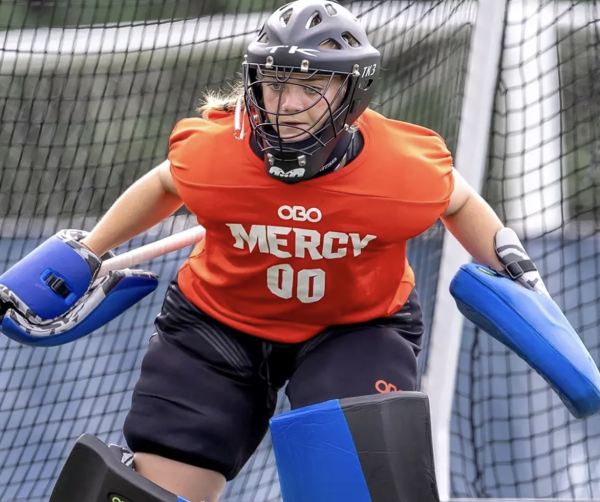

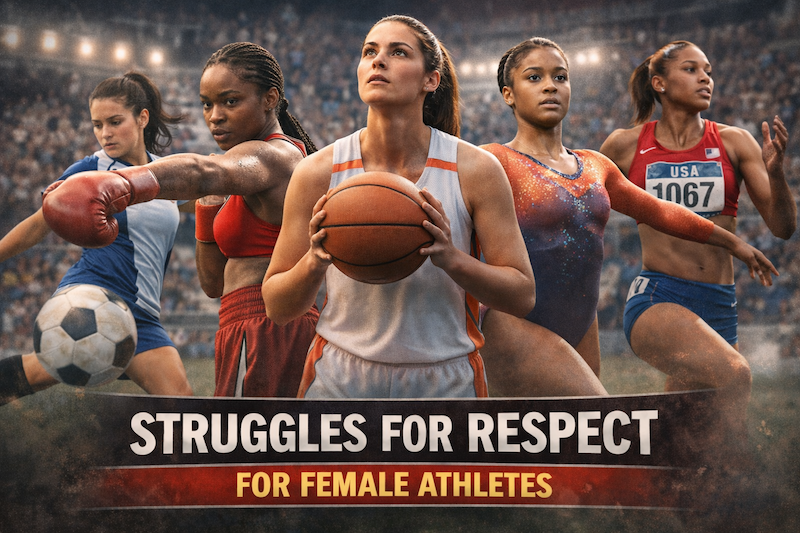
Being a female athlete comes with early mornings, long days, and even longer nights.
The ability to compete in women’s sports at high levels has evolved over the last hundred years, however, it is commonly taken for granted.
Opportunities have rapidly increased since the 1980’s with the addition of female competition in the NCAA.
Women in sports seem to be generationally disadvantaged in comparison to male sports, but through Title lX, laws and regulations have grown to even out opportunities. This requires schools to have a cap on the number of male vs. female athletes at each institution.
We are fighting for respect. Yet we still want more.
Even in 2026, female sports are often not taken seriously. Well-known characteristics such as less attention, fewer crowds, and less funding are not something that is always admitted, but are very much seen across the country. Female sports may not have the same outsider aura, but the charisma is unmatched.
Female sports have been a topic in the media for several years, to enhance the recognition and equality of male sports. This is evident specifically with the new popularity of watching women’s sports. However, there are still noticeable differences.
For example, a season ticket for a Syracuse University men’s lacrosse game with general admission starts at $108, but the women’s season tickets are only $65. This is the same University stadium, the same conference, and the same competitors. The cherry on top is that, even with the men’s season pass being almost 50 percent more than the women’s, the women will be hosting one additional home game than the men’s team.
So logically, the cheaper women’s pass gives more bang for your buck.
Why should a male’s season pass be double the price of a women’s ticket for the same seats at the same stadium, and fewer games? If the price of $65 is compatible with hosting a game in that stadium, why not have the lower price for the same seats across the board?
Increasing the price of a male’s game also increases the segregation between men and women in the sports world by creating the narrative that women’s games are worth less.
The attention women’s sports do get is very often compared to male sports competition.
Referees can also be paid more to work a male competition than a female competition in the same sport, further supporting the divide.
Regardless, women’s sports are more than just numbers and statistics, and truly not for the pride of the viewers. If that were the case, women’s sports would be sparse. Women’s sports are based on the individual high received from competing and creating a life based on passion. Which is only capable after many years of battling for respect from men in the sports world.
The world of female athletics is built upon passion and camaraderie. Having a group of women who go through the same schedule and demands builds lifelong connections. Females are known for having emotional attachments, which is nothing short of the bonds they form through sports. For females, physical abilities are only part of the performance within their sport.
Working together on a female team develops the personality to overcome large and small conflicts under the pressure of competition and success. As amazing as large crowds and fame are, the athletes show up and perform together as one, day in and day out. Bought in with the common goal of the team, female athletes face the competition of their competitors and their
place in society. Winning and success are still expected, despite pressure from the public and a crowd that is not always supportive, or even present.
Female athletes have shaped society for generations, changing norms and fighting for equality. Babe Didrikson Zaharias. Jackie Joyner Kersey. Wilma Rudolph. Nadia Comaneci. Chris Evert. To name a few. While society is still finding more space for female athletes, the urge to keep winning and striving for greatness remains unmatched. While competing is a main focus for all female athletes, the concept of growing the game holds a large place. On top of winning and the relationships created, providing more opportunities for younger generations is one of the most rewarding outcomes of being a female athlete.