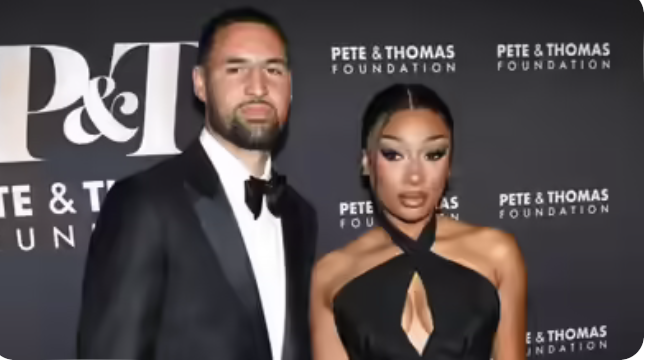
By now, I think everyone, or at least anyone with a phone, has seen the news about Megan Thee Stallion and Klay Thompson. I would not say it is Taylor Swift and Travis Kelce-level media frenzy, but it definitely caused an uproar on social media. I could not scroll without seeing it. And what I saw was what appeared to be facts, but mostly just opinions.
So after I doomscrolled and indulged in other people’s business for around an hour, I started to see how crazy it all actually is. About 8 out of 10 videos I saw of people “reporting” on the situation was maybe 10 percent fact, 85 percent opinion and five percent bias.
Why do we think we actually know these people?
And by people, I mean any celebrity we know and love and have found ourselves speaking on as if we just got off FaceTime with them. I have found myself doing it too. And in my opinion, with the world we live in, where public opinion matters more than facts at times, it is not the most terrible things in the world. It feels normal at this point. It feels like participation.
But when we pick up a phone, prop it up, and speak as if it is fact, painting people in the light we deem acceptable, is it still okay? When does it border on being obsessed?
Because what I’ve started noticing is that most of what people are reacting to isn’t even full information. It is clips, it is fragments, it is angles, it is timing that we were never actually there for. And instead of saying we do not know, people fill in the blanks. And those blanks turn into full narratives very quickly.
This is what happened. This is what it means. This is who they are.
And once enough people repeat it, it starts to feel real.
That is the part that got me thinking the most. Not even the situation itself, but how quickly strangers become convinced they understand someone’s life from a few seconds of footage. It is like the internet turns people into open books, but only certain pages are shown, and somehow everyone feels qualified to summarize the entire story.
And I do not even think it is always malicious. I think it is just how things move now. Everything is fast, immediate, and supposed to be understood right away. There is no patience for “we do not know” anymore. There is only space for conclusions.
But the issue is that conclusions drawn from incomplete information do not remain confined to celebrities. That habit starts to show up everywhere. In how we talk about people, how we judge situations, and how quickly we assign meaning to things we were never fully present for.
And it also creates this weird illusion that access equals understanding. Just because we can see someone does not mean we know them. Just because something is public does not mean it is ours to define. There is a difference between observing something and inserting yourself into it, and that line keeps getting thinner.
I am not saying people should not talk, engage, or react. That would be unrealistic in the world we live in. But I do think there should be more awareness of how easily we start building certainty out of fragments.
Because at the end of the day, we are still talking about people. Not characters, not storylines, not content meant to be decoded and finalized by strangers on the internet.
And I think it is worth asking ourselves more often how often we are speaking about something and how often we are actually seeing it.