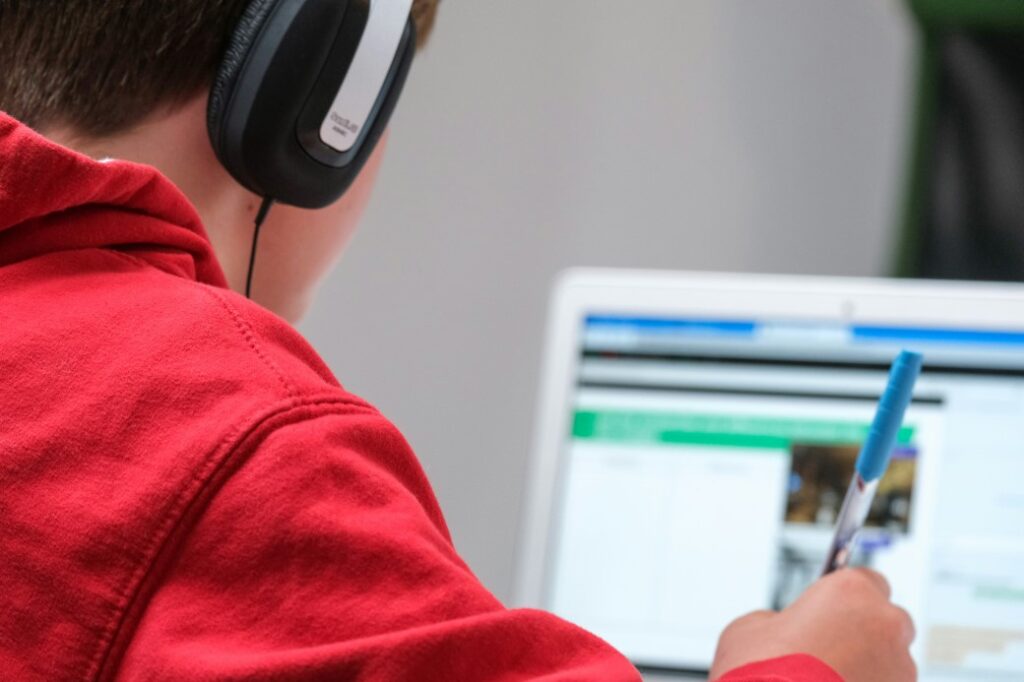
A little over six years after COVID-19 reshaped classrooms across the country, the effects of that shift are still visible throughout college campuses. What began as an emergency response during the Fall 2020 semester has since evolved into a permanent part of higher education. At Mercy University, students now move through a system in which online and in-person learning coexist, allowing them to build schedules around work, commuting, family responsibilities, and personal learning styles.
For many students, choosing between online and in-person courses is no longer simply about convenience. It has become part of how they balance everyday life while pursuing a degree.
Nationally, online learning remains common even years after the height of the pandemic. According to recent higher education data, millions of college students across the United States continue taking at least one online course each semester.
While campuses have largely returned to normal operations, virtual learning has remained deeply integrated into college education rather than disappearing once restrictions ended. That reality can be seen across departments and class schedules. Some students prefer the flexibility and independence online classes provide, while others feel more connected and academically successful inside a traditional classroom setting.
For Annabelle Fernandez, a junior balancing school with full-time employment, online learning has become essential to maintaining stability in her schedule.
“I think that it’s a bit easier for me because I do work full time as well, so it allows me to do my work at home and then also make money at the same time,” Fernandez said.
Like many students at Mercy, Fernandez manages multiple responsibilities outside of school. Between work obligations, assignments, and maintaining personal time, she said online courses create flexibility that would otherwise be difficult to achieve.
Her experience reflects a broader shift among college students who increasingly structure their academic lives around employment and financial responsibilities. For commuting students, especially, online classes can remove hours spent traveling back and forth to campus each week.
Still, Fernandez explained that adapting to virtual learning was not immediate.
“At first, I felt that in online classes, I wasn’t able to concentrate,” she said. “But, being that it became so common to do it, I think that I’ve gotten used to it.”
During the early years of remote learning, many students struggled with motivation, distractions at home, and the lack of face-to-face interaction. Bedrooms became classrooms, kitchen tables became study spaces, and daily routines were abruptly disrupted. For some students, that adjustment created feelings of isolation and disconnection from campus life.
Fernandez said that over time, she learned how to build structure into her day and separate distractions from schoolwork. What once felt unfamiliar gradually became part of her normal routine.
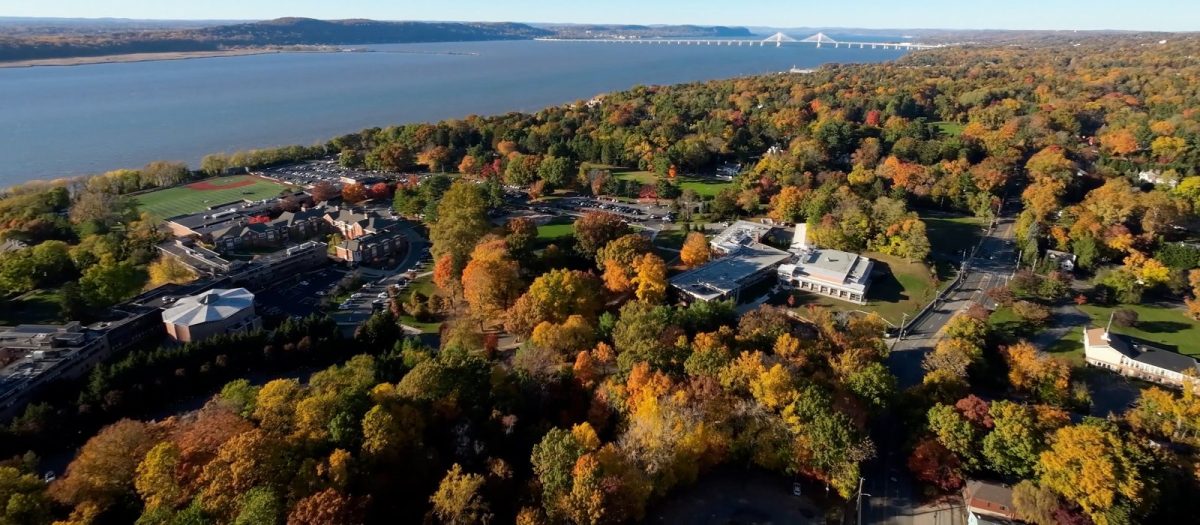
Around Mercy’s Dobbs Ferry campus, however, the appeal of in-person learning is still evident. Students continue gathering in classrooms, study lounges, the library, Hudson Hall, and campus cafes throughout the day. Conversations between classmates spill into the hallways after lectures, while student organizations and campus events continue to rebuild the social atmosphere many students missed during remote-learning years.
For sophomore Shoayb Mughal, that interaction is exactly why he prefers learning in person.
“I would prefer in-person classes because I actually like seeing the person and interacting like that,” Mughal said.
He explained that physical classrooms create a stronger sense of engagement and accountability.
“I feel like it’s more interactive than online,” he said.
Mughal said being present in class helps him focus more clearly and participate in discussions without the distractions that can come with virtual learning environments.
He also believes face-to-face instruction creates stronger communication between students and professors.
In many ways, his perspective reflects what some students felt was missing during the pandemic years. While online learning provided flexibility, many students missed the social and academic energy that comes naturally with physically sharing a classroom.
“I would like to stay in person,” Mughal said.
The contrast between Fernandez and Mughal’s experiences demonstrates how differently students now approach higher education. For some, flexibility and convenience are essential. For others, structure and interaction remain more effective academically.
Rather than replacing one format with another, Mercy University now operates within a blended system that reflects both needs simultaneously. Students frequently combine online and in-person classes within the same semester, creating schedules that fit around employment, commuting, athletics, or family responsibilities.
The contrast between Fernandez and Mughal’s experiences demonstrates how differently students now approach higher education. For some, flexibility and convenience are essential. For others, structure and interaction remain more effective academically.
Rather than replacing one format with another, Mercy University now operates within a blended system that reflects both needs simultaneously. Students frequently combine online and in-person classes within the same semester, creating schedules that fit around employment, commuting, athletics, or family responsibilities.
That flexibility has also changed the physical rhythm of campus life. Certain hours of the day remain crowded with students attending lectures or studying together, while other students complete coursework remotely from home, workplaces, or public spaces. The traditional image of college as a fully in-person experience has shifted into something far more individualized.
Even so, campus life remains active. Students can still be found throughout Mercy, sitting outside in lawn chairs between classes, studying in the library, gathering in Hudson Hall, or eating together inside Main Hall. The energy of student life never fully disappeared; it simply adapted alongside the changing structure of education itself.
More than six years after the pandemic first disrupted higher education, students at Mercy University continue navigating a college experience shaped by both flexibility and adaptation. Online learning is no longer viewed as temporary, and in-person instruction remains equally valued by students who seek connection and interaction. Together, both formats now represent the modern reality of college life, where education is shaped not only by classrooms but also by the lives students lead beyond them.