A gallon of gas in parts of Westchester County has recently reached between the low $4 range and as high as $4.88 to $4.90 depending on location, bringing parts of the Hudson Valley close to the five-dollar mark.
According to AAA data, New York’s statewide average has remained above the national average in 2026, with prices consistently fluctuating in response to global oil supply changes and regional demand patterns.
For students commuting to campus in Dobbs Ferry, those numbers are not abstract economic indicators. They determine how much it costs to attend class each week.
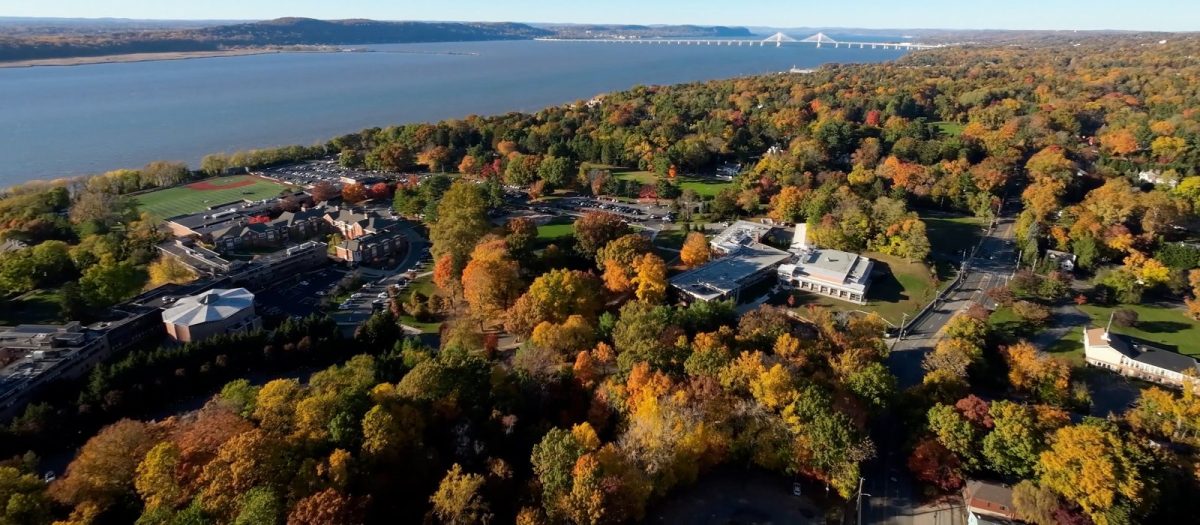
At Mercy University, transportation has become a quiet but unavoidable part of student life. Parking lots begin filling early in the morning as students arrive from surrounding towns, the Bronx, Scarsdale and other parts of Westchester County. For many commuters, getting to class now requires the same level of planning as paying for textbooks or tuition.
For Layla Greene, the cost of gas depends on how often she drives during the week.
“If it was safe, I’d fill up once a week, it’d be about 60 bucks,” Greene said.
“This weekend I spent $80.”
While Greene said she personally manages the expense, she believes many students are becoming increasingly anxious about where prices may go next.
“I can see how that would cause other people stress,” she said.
Greene added that conversations about gas prices have become more common among students, especially with rumors of possible increases continuing to circulate.
“I guess there’s been speculation of saying it might increase even more to like six, seven dollars,” she said.
The concern extends beyond simply filling a tank. Rising transportation costs affect how students organize the rest of their week. Some students schedule classes closer together to avoid driving to campus multiple times.
Others pick earlier classes to avoid traffic and wasting additional gas during long commutes throughy Westchester and the Bronx.
Joel Lucero, a junior transfer student from Westchester Community College, said gas prices have become one of the more frustrating parts of balancing school and work.
“Gas prices have affected so much,” Lucero said. “My commute, because I also work, so having to go up and down from Scarsdale to Dobbs Ferry and then back to the Bronx.”
Lucero comes to campus four days a week and said he currently spends around $70 weekly on fuel alone.
“I have to keep $100 with me all the time,” he said
Rather than changing how often he attends class, Lucero said the expense mainly changes how he manages the rest of his spending. He mentioned using gas station reward apps to slightly lower costs whenever possible.
“Regardless, I still come,” he said.
That determination reflects the reality for many commuter students. Missing class is rarely viewed as an option simply because gas prices increase.
Instead, students absorb the cost and adjust elsewhere, whether that means spending less on food, limiting social activities or working additional hours during the semester.
Anthony Dolce, a senior, said his situation changed after moving closer to campus. “I’d say $15,” Dolce said when asked how much he spends on gas weekly.
Dolce explained that transportation affected him more heavily when he first transferred in 2024 and commuted regularly.
“If I drove more, it would definitely matter a lot more,” he said.
Even students who do not commute daily still recognize how expensive transportation has become across the region. Throughout Westchester County, gas prices have remained consistently above national averages for much of the year, creating additional pressure for working students already balancing multiple financial responsibilities.
Bernard Gutierrez, a junior, said he only drives to campus about once a week. Although the expense has not significantly changed his routine, he acknowledged that the prices are noticeably high.
“It’s very high,” Gutierrez said. “We’re spending more money on gas.”
Unlike larger national conversations surrounding inflation, students experience these rising costs in direct and immediate ways. Transportation is tied to attendance, work schedules and access to campus resources. For students without reliable alternatives, driving remains the only realistic option.
Public transportation can reduce some costs, but it is not always practical depending on class schedules, travel distance or work obligations after class. Carpooling is also difficult for students whose schedules change throughout the semester.
As a result, many commuter students continue adapting quietly. Some leave home earlier to avoid traffic. Others arrange their entire semester around limiting trips to campus. What once may have been viewed as a normal weekly expense has now become something students actively monitor and calculate.
In a university community where many students travel from outside Dobbs Ferry each day, transportation has become more than just part of the commute. It has become another financial responsibility attached to earning a degree.
As gas prices continue fluctuating throughout New York and the Hudson Valley, students say one thing remains consistent: getting to campus is becoming increasingly expensive, and for many commuters, there is little
A gallon of gas in parts of Westchester County has recently reached between the mid $3 range and as high as $4.1 to $4.90 depending on location, bringing parts of the Hudson Valley close to the five-dollar mark. According to AAA data, New York’s statewide average has remained above the national average in 2026, with prices consistently choice but to keep paying the price.