Closing of Campus
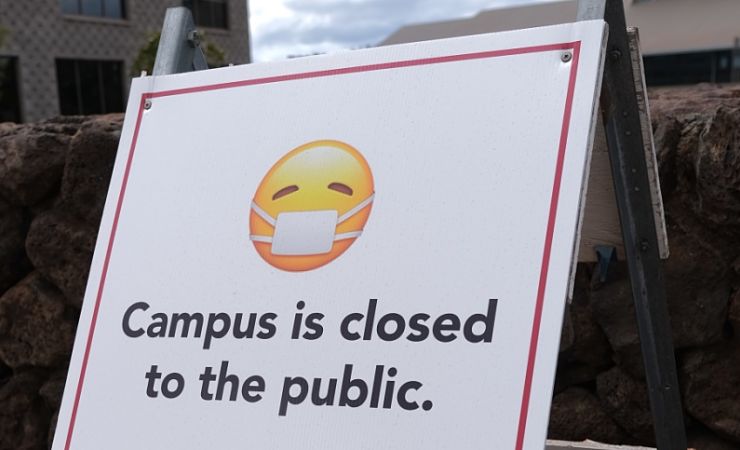
The air felt the same on-campus, and without looking at the news, no one would have suspected the winds of change had already swept over our nation. In classes, we spoke about COVID as if we had been transported back to 1940 and witnessed the battles of a war that had not yet touched our world. Everything was about China and how unfortunate the state of distress their country was in had been. How would they fight it, and would they even be able to?
March 2020 somewhat resembled Dec. 7, 1941. Our nation had been dragged into a battle that we did not want to enter, but had no choice but to accept.
Our world has changed drastically, and as we approach a year of mask-wearing and 6 feet apart signs, the end does not seem to be anywhere in sight as cases continue to increase and deaths double. When Covid-19 is the topic, many talk about how jobs were affected or how millions of people could not pay their rent and mortgages. They talk about essential workers and making sure we thank our teachers and nurses, but there is a large population of our world we cannot forget about: college students. Lives changed without warning, and many had just begun to find their purpose and change their mindsets. They were forced to stop all growth.
Students living on campus and attending classes were told to pack up and be out by the end of the week. Fear had settled in; hand sanitizer, which had not been a focus before, had disappeared from dispensers positioned around campus, and luck was not on anyone’s side if they tried to buy some from the school store. Toilet paper was left with students who did not buy it. No one was sure of what to expect.
Many wanted to go home already because of the uncertain reporting on the news and parents beginning to warn of a strange disease that had taken root in our usually untouched, protected world. Mothers, grandmas, and fathers wanted their children home where they could be kept “safe,” and they were given just that. Something that had taken lives overseas had found its way into the States, and that in and of itself was not something familiar for us to witness, so panic ensued.
“When the campuses closed, I honestly thought it would be temporary, like maybe for a month or two. I was a little nervous at first, with all the extra talk in the media about the virus. When I picked up on the topic, it was in February, and every day of every week was something new. I was taking a microeconomics course at the time, and in my class it was required to report at least once a week on what’s going on with the stock markets. So in the beginning, it didn’t seem like a big deal, not too many people were talking about it at the time. And then, when I started to really take note, it became more serious. I was nervous; I didn’t know what was going to happen. And then a month later they shut down the campus, and around April they decided to resume courses online,” said Tiffany Gurrea, a student, when asked if she could remember how she felt during the beginning stages of COVID in the U.S.
Life was changing for students all across the country, without their consent, and it caused a rapid decline in many of them’s mental health. Many students go away to school or enjoy going to campus for class because it gives them time away from their lives at home. Some could be facing domestic violence or the arguing of their parents, which causes tension in the home. However, they were pushed right back into those situations and eventually forced to lockdown. It is essential for humans to interact with each other, especially during grade school and college years, to form social connections and have opportunities to interact socially. We need to be in the sun to help our bodies, and we need fresh air to feel sane, sometimes, but that was all taken away. Zoom became routine, and sitting in front of a screen, separating us from professors and classmates, limited social interaction at a time when it is most vital to young minds’ development.
“If the goal truly is to stop the spread of the virus and keep people safe, then I say it should be left up to the president of the campus or maybe just the state alone,” responded Gurrea when asked if students should be able to decide if they want to resume in-person classes or stay online. She goes on to say about mental health,
“As far as mental health goes, it’s been a wild ride, honestly. People don’t talk about it but seasonal depression is a thing. Being in the house definitely has not helped. I deal with seasonal depression in the wintertime. The sun goes down early, snow is falling, and it’s cold. Sometimes there are power outages. The majority of the time, I’m in the house. I stick to a routine and to be honest, the routine gets depressing. Every morning you wake up and get ready to go about your day, whether it’s work, school, or both, whatever the case may be. It gets tiring, and it gets boring. You basically hit a deadlock. Well, that’s how it feels to me. But with this whole “lockdown,” the first couple of months was iffy. I thought it would be temporary. Then there were so many things going on in the media. Some people were talking about 5G. There was a theory that the reason for the lockdown was that they started putting up 5G towers, people started getting sick, and our bodies weren’t meant to handle the radiation. Everyone was home except for my dad he was still working. I was worried about my dad working in the city. I was worried about the black lives matter protests because not only was my dad black but he’s also a cop I was worried when he was on the clock but I was also worried when he was off the clock and out of his uniform. It was stressful, and it was sad. With everything going on it’s been depressing as hell. My mental health didn’t get better, it got worse. Especially when they put school back in session (online learning). All this shit was going on back-to-back. Even now to this day, I’m still having my ups and downs. I’m working now but just barely working because of everything going on I’m not getting any hours.”
Worry is evident in her tone as a student, and she is not the only one who fears and has feared the same things. Our lives were taken away for a good reason, but that does not negate the fact that our lives, no matter how busy we were, were essential and necessary to keep us functioning as members of society. Being with friends is what we loved to do, and having that small grant of freedom by being independent adults at school is how many thrived. It has been hard to endure, and we can only hope times change soon for our mental and social sakes.

Erykah Beaulieu is currently a senior at Mercy University. She's had a passion for chasing news stories since middle school and decided in high school...