Patricia was 6 years old when her father was taking her to a basket maintenance event. She remembered sitting in the circle with her elders, weaving baskets and telling stories. All of her elders were at least 100 years old.
Fifty years later, in the Ramapough Lenape community today (stetching from Northern New Jersey to Southern New York), one is lucky to make it to 60 years old.
And even if the elders live that long, they are often sick with environmental diseases caused by the metals that contaminate their ancestral lands. Their elders cannot sustain life long enough to pass down traditions.
The tri-state area was originally home to the Lenape Nation, which stretched across New York City, Long Island, Westchester, New Jersey, and extended into regions of Connecticut and Pennsylvania.
The Ramapough Lenape people have been pushed into lands which they claim are unlivable. The three clans (Turtle, Deer, and Wolf clans) now live within a seven-mile radius around the Ramapough Pass within Rockland County, New York, and Bergen County, New Jersey. Their water and soil are contaminated with heavy metals, they say. Ramapough natives have brought this to the local governments, and they say they are failing to listen.
The New York University Grossman School of Medicine has continued to collaborate with the Lenape community over the past twelve years to support their flourishing.
“When they listen, when they hear us, they need to put aside their feelings,” said Patricia Osterhoudt (Deer Clan) about the local lawmakers.
The Ramapough Nation has been denied federal recognition twice, despite being recognized by the state of New Jersey. This has made it increasingly difficult for them to negotiate with the local and federal governments. Their soil is contaminated with lead and mercury.
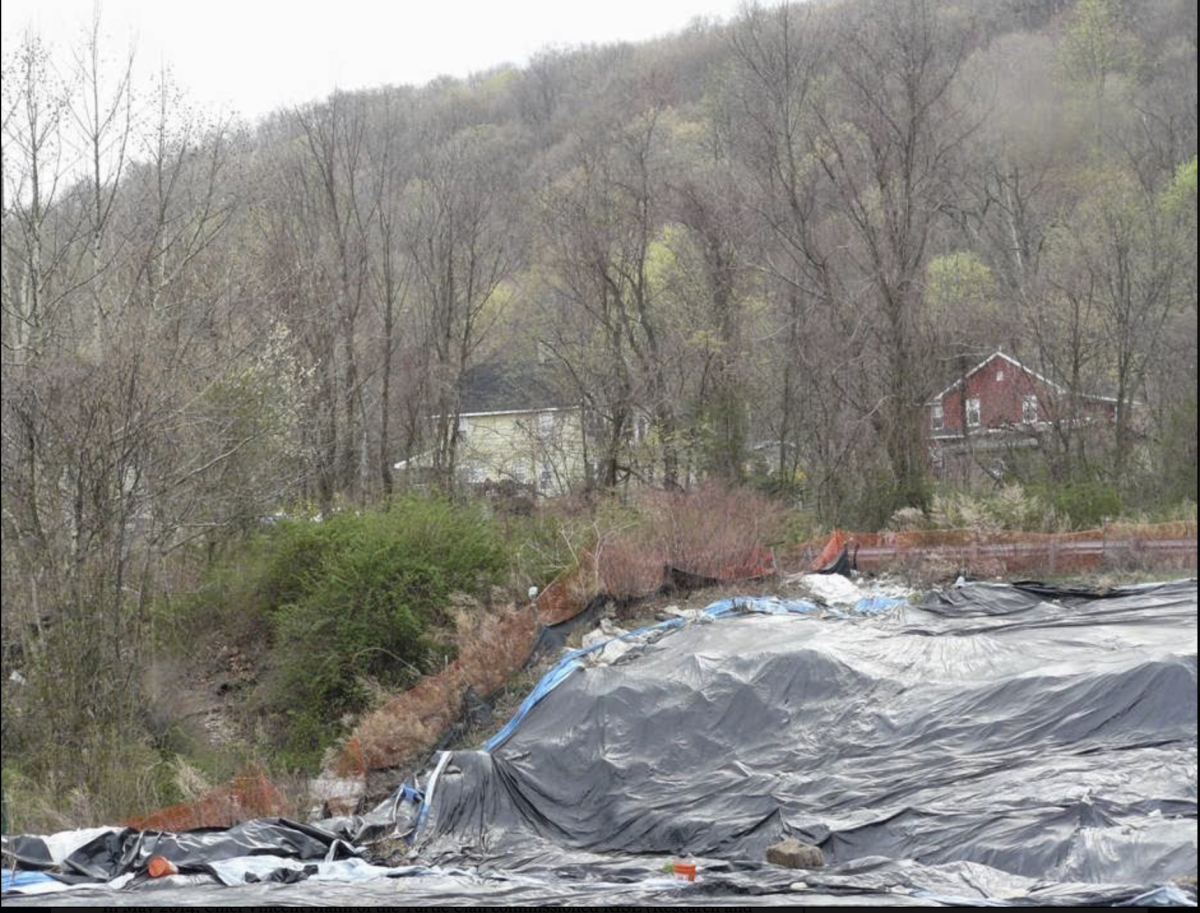
The Ramapo Mountains contamination centered on the Ringwood Mines. Iron mining operations date back to the 1700s initially spread metals on the land. For twenty years from the 1950s to the 1970s, there was dumping of industrial waste from Ford Motor Company as it deposited thousands of tons of toxic materials containing lead, arsenic, cadmium, and other metals into the mine pits and the surrounding land. Those materials were later used as fill for roads, yards, and driveways in nearby residential areas where members of the Ramapough Lenape Indian Nation lived. Erosion and runoff spread contamination through soil and waterways, including children and the elderly. The area was named a Superfund location in 2006 and cleanup efforts led by the Environmental Protection Agency removed large amounts of contaminated soil, but repeated discoveries of remaining toxins revealed that the pollution was more extensive and persistent than initially acknowledged.
Lead was not regulated in the United States until the 1960s and 1970s. The use of lead paint in car production wasn’t regulated until the end of the 1970s. Chief Mann (Turtle Clan) had a legal dispute with Ford Motor Co. in 2009 due to decades of toxic metals and waste being dumped near their homes. This resulted in a $10 million settlement for approximately 600 people from Upper Ringwood, many of whom were members of the Ramapough Lenape Nation. Despite the settlements, they continue to live in unsafe conditions.
Upper Ringwood, New Jersey, is facing the same chronic health issues due to its proximity to the Superfund site. Even when people leave Ramapough country, they have health problems. Some studies claim that lead exposure in humans can affect DNA and gene expression. There are concerns it can be passed to the next generation by the residents, they say.
The Church of the Good Shepherd is an essential community institution for the Ramapough people. Though the church is located off the Superfund site, the water and soil showed heavy contamination. The church was using a well that often wasn’t shown on building plans, tbey say. The NYU Health Action Alliance collected and monitored the soil and water. They were able to negotiate with the local government to transition the church from well water to municipal water.
Due to the denial of federal recognition for the Ramapough Lenape people, their members are ineligible for Indian Health Service care, they say. As a result, many do not have health insurance. Several nearby universities visit Ramapough country to provide health screenings and education to the tribal members. This, paired with Munsee language classes supported by the Health Action Alliance at NYU, helps preserve the language of the Ramapough people. It is often that people come and tell the communities what they need, the Health Action Alliance has focused on letting the Ramapough Country self-direct their support.
Jill Aquino, the community coordinator for the Health Action Alliance at NYU, organizes with the local Lenape community on a weekly basis to help provide for the community. The Ramapough people have the ability to determine the form of educational support for their community.
“One of the things that we at NYU try to be extremely, extremely aware of is listening to the community’s needs,” she said. “Literally listening to what they have to say, not talking over people. And not coming in and saying ‘Well, this is what we at NYU think you need…’”
The Lenape people lack food sovereignty due to soil contamination, they told The Impact. The Munsee Three Sisters Medicinal Farm is actively combating this issue. This farm was established to hold New Jersey accountable for the Superfund site, where the Turtle Clan people once lived. The money from the Munsee Three Sisters Medicinal Farm was used to hire lawyers. The COVID-19 pandemic was a blessing in disguise, helping to create the garden and utilize their resources to support their community during a difficult time. They kept the community safe with such limited resources. They decided to then grow food, rather than hemp, to promote food sovereignty and keep their people healthy. The farm also serves as a place of education, a place where Ramapough youth build relationships with their elders and pass down the oral traditions. Non-natives are welcome and even invited to visit the farm and learn about the Ramapough Lenape people.
The Deer Clan, like many other indigenous communities, is quickly dying off due to environmentally related issues, showing the contamination of their soil and water through heavy metals. Pollution exposure has reduced the Deer Clan population from approximately 500 to roughly 150 people.
“The Deer Clan is literally dying off and nobody cares. Nobody lifts a finger to do a thing,” Deer clan Chief Carla Alexander said. “We hear ‘Sorry. ‘Wish I could do something’. Well ‘sorry’ doesn’t help when you’re going to funerals every couple of weeks.”
They site the problem is from the Ford Motor Co. through their dumping of thousands of tons of toxic metal-enriched paint sludge that was dumped in Torne Valley. This also impacted the Wolf clan, located in Mahwah, New Jersey. This paint sludge contains metals and chemical solvents known to cause cancer. These include benzene and toxic metals like nickel, lead, and manganese. The men in Hillburn have experienced disproportionately high rates of a rare form of leukemia, they say. This strain of leukemia is linked to arsenic and benzene. Other residents of the community experience unusually high rates of hypospadias birth defects, lupus, and congestive heart failure.
Among these challenges, the Deer Clan has fought hard as a community together to keep the community. Brook Church has provided this space for the Lenape community. With Brook Church’s history as a stop on the Underground Railroad, this location holds deep power and resilience. They have an organization called Wellbriety, a substance use recovery program based on indigenous spirituality. This program adapts principles from Alcoholics Anonymous, which was initially derived from the Code of Handsome Lake, a spiritual text from the Seneca tribe. Substance abuse is a large epidemic in the native community due to the widespread trauma. Wellbriety strives to promote the indigenous identity among youth and support the elders.
“The only way to break that trauma is to really connect more to our own indigenous roots,” said Patricia Osterhoudt (Deer clan), a Wellbriety peer recovery coach, about indigenous trauma.
The collaboration between the NYU Grossman School of Medicine and the Ramapough Lenape community has been characterized by a relationship of mutual respect and trust. NYU working with this community to self-direct their needs has allowed the Lenape tribe to flourish. Centering the community’s voice in education, research, and advocacy was crucial to creating the next step of indigenous sovereignty, she said.
The model used between these two communities is unique and has been proven effective. Maintaining authentic and ongoing support while also holding those in charge accountable. This relationship exemplifies how academic institutions can effectively partner with communities to develop equitable solutions rooted in cultural traditions.
She adds, “True partnership and allyship start with less talking and more listening.”