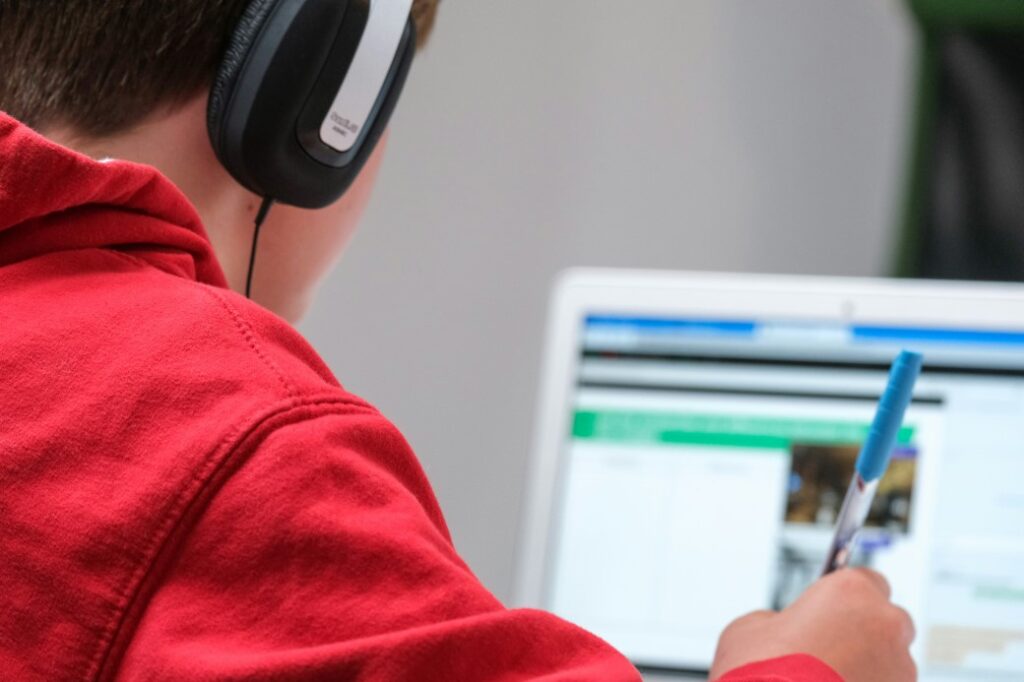
Instead of picking up a newspaper or a book, what’s the first item you reach for in the morning?
Be honest, do you grab your phone? Maybe the TV remote?
That seems more likley.
Within seconds, many people are already locked in, scrolling through the latest trends, headlines, and breaking news on X (formerly Twitter), TikTok, and Instagram. The current generation is flooded with news from social media. And for college students at Mercy, it seems to be the norm.
Research from the Pew Research Center says stats “A large majority of U.S. adults (86 percent) say they at least sometimes get news from a smartphone, computer or tablet, including 56 percent who say they do so often. This figure is almost identical to the share who said they at least sometimes got news from digital devices in 2024.
“Digital devices are by far the most common way Americans get news, although a majority (64 percent) get news from television at least sometimes. This includes 32 percent who say they often get news from TV, which has stayed fairly steady over the last few years.:
And according to another study by Pew, three out of four say they get some of their news from social media, the majoirty being from TikTok, while Facebook, Instagram and Youtube ar enot far behind.
The report shows that actual news gathering and discovery are from Facebook then Youtube, but news sharing is now overwhelmingly via TikTok and then Twitter.
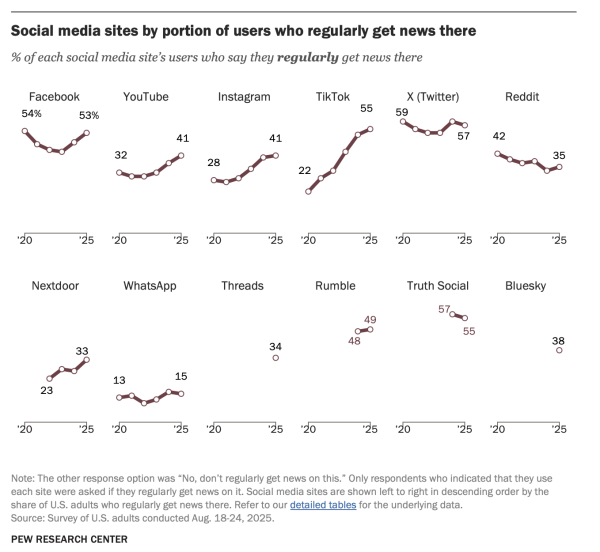 It’s not a one year blip, as in 2016, 38 percent of young adults were disovering news on social media, and that number has increased to over 53 percent.
Americans turn to radio and print publications for news less frequently. In 2025, 11 percent of U.S. adults say they often get news from radio, and 7 percent say the same about printed newspapers or magazines both roughly the same as last year.
Digital devices such as smart phones and tablets are not longer luxuries, but becoming a requirement for news gathering. The definatino fo news is also changing, as new finders may not consider traditional media as the news source. Bloggers, content creators and “organizations” without credentials are considered news by young adults, said a Pew report. Not all believe what they read on social media though, as 35 percent are skeptical and that they view social media discovery as “convienant and not always relieable.”
Many of the young adults do not seek out news but stuble upon it, which is known as incidental exposure. The algorithm factor, or social media sites blasting out stories with high activity suach as likes and shares, lead to these discovieres.
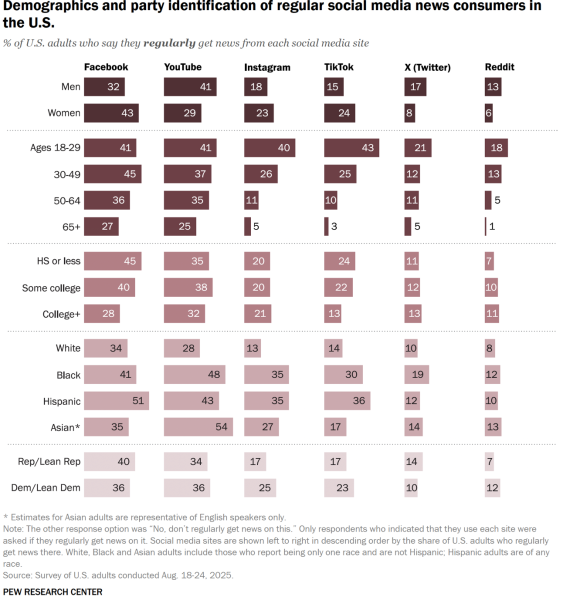
Now to find out, students around campus were asked where they go to learn what’s happening in the world. Between classes and during coffee breaks, the majority gave the same answer: social media.
Brandon, a sophomore education major, explained that he never watches TV news or reads newspapers.
“To be honest, I get everything from Instagram and TikTok,” he said. “If something important happens, I usually see it there within minutes. If it seems serious, I’ll look it up later, but I typically come across it first through quick videos or memes.”
His response was common among many students. Traditional news apps can feel too formal or overwhelming, and even though social media isn’t always reliable, it’s far easier to scroll. When asked if he worries about misinformation, Brandon admitted that he does.
He acknowledged that not everything online is accurate and that it can be difficult to tell what’s real. He tries to follow trustworthy accounts, he added, but it becomes challenging when dozens of people post the same content whether it’s fact, opinion, or false information.
A glance at a typical news feed makes this clear. Timelines have become a mixture of education, entertainment, and confusion. Misinformation blends with legitimate news, memes, and commentary, leaving students to determine what’s true.