“Just use ChatGPT.”
The sentence many hear when they complain about a task they have to do, a paper they have to write. Artificial Intelligence (AI) has become one of the fastest moving pieces of technology in recent years. Generative AI specifically creates endlessly for people who insert the prompts. But is AI truly helping? This is the question many ask. With the many diverse uses of AI, society has to consider whether or not the benefits outweigh the risks.
Educators are fighting a battle against AI, whereas students are often highlighting the benefits. An infinite power struggle within the classroom. Gaby Rodriguez, a sophomore at Mercy University, believes that AI can have its place, but that people need to be mindful of how it’s used.
“As a society, we should be using AI to make things easier, but not to replace things,” Rodriguez said. “People have used AI to help with things that people don’t need help with.”
AI overshadowing what is fundamental to humans is the danger she highlights. Fundamental things like imagination and creativity. She holds firm that society should work with AI, not to have AI do the work for people. Many careers require critical thinking, and the use of AI shouldn’t be villainized. Society just has to be mindful of how they use it.
According to Pew Research Center, 57 percent of Americans believe AI is a high risk or very high risk to society. Many in this group cite the aforementioned concerns, such as dissolving the creativity and grit that keeps humans, people.
Recently there have been reports of generative AI platforms encouraging suicide in adolescents. With a lack of proper control over the platforms, AI poses serious risks to the youth in society.
As a response to much of the harm caused by AI, during New York’s 2025 legislative session, Assembly Bill A6453A, or the Responsible AI Safety and Education (RAISE) Act was introduced. The RAISE Act is unprecedented in its nature, as New York is the first state to propose safety guidelines on AI usage and large scale corporations. The bill, primarily sponsored by Assemblymember Alex Bores and State Senator Andrew Goundares, would create regulations on large AI companies. The RAISE Act primarily focuses on the largest AI companies, such as Meta, OpenAI, Google, and Deepseek. This law would require these companies to write, publish, and then follow safety protocols and have risk evaluations performed. The protocols required would cover things like assisting in creating biological weapons or aiding in mass automated criminal activities.
The RAISE Act also would hold these companies accountable, allowing the New York State Attorney General to bring civil penalties against the companies who fail to live up to these standards. Major AI companies will then be required to report major incidents, such as the AI behaving in a dangerous way or being used maliciously, as well as not allowing companies to release models that create a disproportionate risk to serious harm. This law is only applicable to companies that have spent more than $100 million in resources to train AI models whilst focusing on the most severe risks.
Several innovators advise that laws such as the RAISE Act could slow innovation of technology, pushing investors to work in jurisdictions that more efficiently balance safety with efficiency. Some worry this law will drive innovators to move out of New York. As social media is different from AI, the American Innovators Network warns against the premature regulation of AI. Highlighting its diverse uses, they believe laws like the RAISE Act could block vital uses for AI such as in healthcare, climate research, and education before it ever starts. Without the passage of the RAISE Act, New York’s existing law surrounding consumer protections, criminal laws, and civil rights can already be used to regulate AI companies.
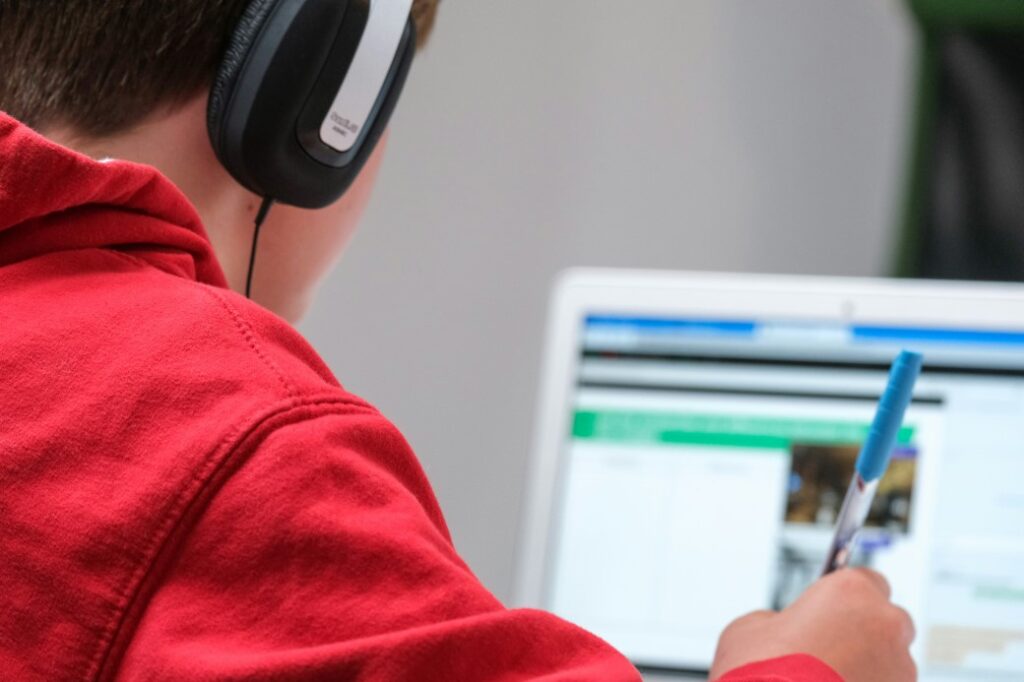
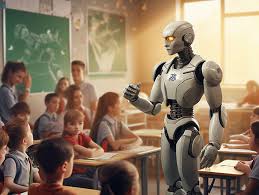
In the classroom, AI is a struggle teachers are having to fight against consistently. Amanda Gebhardt, a Spanish teacher at Starpoint Highschool, notes her student’s continuous dependence on AI models like ChatGPT.
As a foreign language teacher, she emphasizes the real world connections her students will have to make. Understanding that whilst AI can be useful for personal use, there should be the development of communication skills before consulting with AI. AI within the classroom is hindering the organic learning process. The ability to document sources and use educational resources, beyond a platform that just gives the answers, is a crucial developmental need for many careers. She encourages her students to look up words they aren’t familiar with, but strongly advises against full sentences and papers because that is not truly learning a language.
“When push comes to shove and they sit for an exam, that resource isn’t available,” Amanda said.
With the current ongoing illiteracy crisis, many teachers hold that AI is not helping students for their comprehension or reading skills. That it creates a mindless “copy-paste” rather than truly developing the skills and knowledge to function within society.
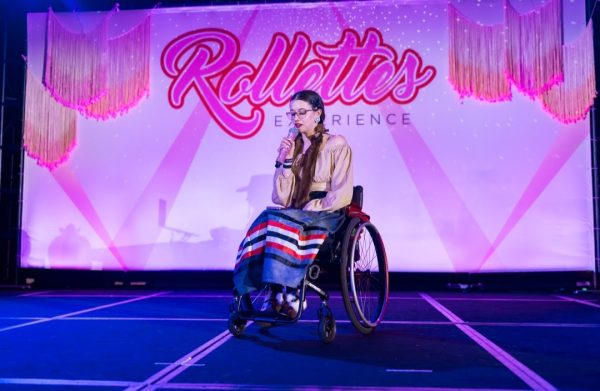
Whilst AI platforms may not have its place in the classroom, it can hold a spot for supplemental learning of languages. Danielle Boyer, an Anishinaabe youth robotics inventor, has created what is known as the “SkoBot.” The SkoBot uses ethical, sustainable, and indigenous developmented AI in order to preserve her endangered indigenous language, Anishinaabemowin.
“To me, to lose my language is to lose a piece of myself,” Boyer said.
The SkoBot is made out of recyclable plastics through 3D printing. Students who use the robots build them themselves. The SkoBot uses pre-recorded audio files of children, elders, and language experts rather than generative AI. With this, the SkoBot will listen to what words you use and then respond in the corresponding word in Anishinaabemowin, creating the fundamental skills needed to preserve language, auditory communications. Boyer stresses through her mission that the SkoBot is never there to replace true community connection, but is a great supplemental tool.
The SkoBot partners with tribal schools to maintain connection to the indigenous language for free. Creating an opportunity for Anishinaabe children to access their native language and continue learning beyond the classroom. SkoBot is currently working on more indigenous languages and expanding their models to aid more native communities across the United States and Canada. SkoBot maintains that the audio files and data used within the robots will never be owned by the company or used for profits.
There are many diverse uses of AI, but environmental activists warn against the use. As generative AI centers get larger, they require more energy to run and more freshwater to cool the systems. Various studies claim that a single AI generated image uses the same amount of energy as completely charging a phone. Whilst it would be quite difficult to quantify the true impact of AI, researchers urge consumers to be mindful of the carbon footprint.