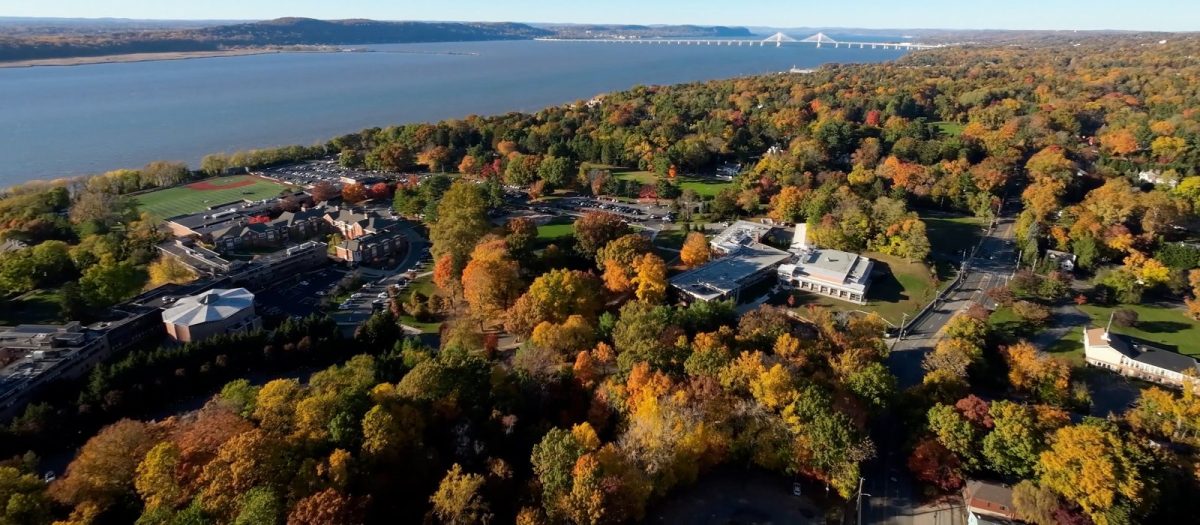
Mercy University sits quietly alongside the Hudson River, its brick buildings and pathways draped in the chill of late fall. The wind off the water slices sharply across campus, tugging at scarves and coats as students hurry between classes. Noses and cheeks redden, backpacks pulled tight, heads down. Inside classrooms and study spaces, the cold seems to linger, amplified by the weight of finals week. Even the sun feels muted, dipping earlier each day, adding a hint of seasonal gloom to an already tense environment.
During the last two weeks of December, the campus transforms. The usual rhythm of student life, laughter in hallways, outdoor games, casual conversations, gives way to a focused intensity. Friend groups that once gathered casually are no longer there, replaced by students hunched over textbooks and laptops, navigating deadlines that compress months of learning into two weeks. Playtime is over, and the energy on campus reflects that. Determination, anxiety, and a persistent push toward completion fills the air.
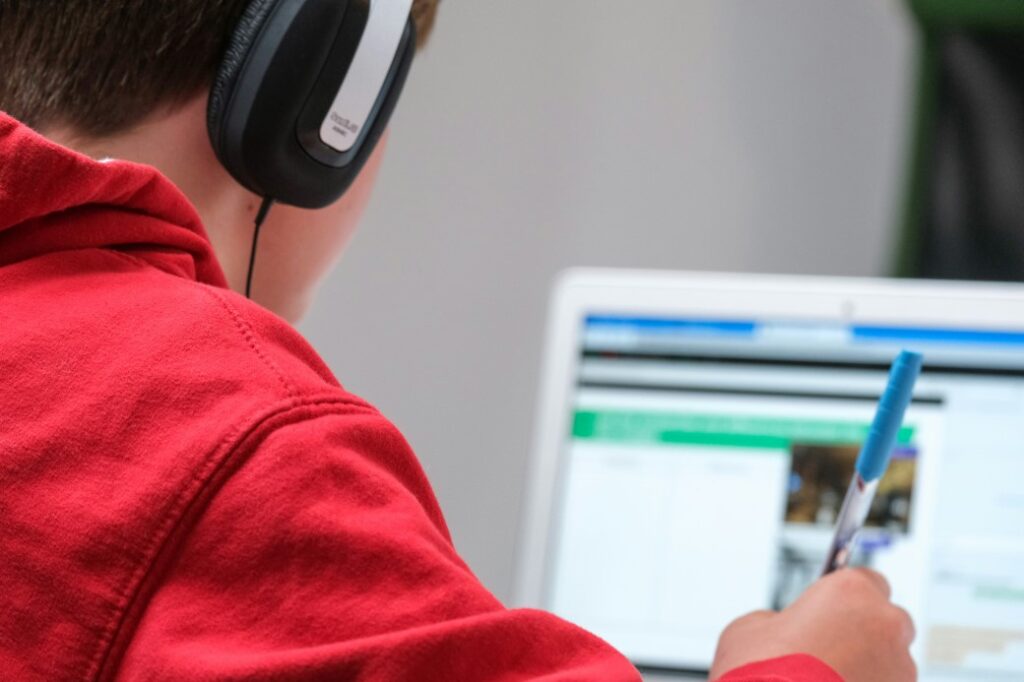
The library becomes a hub of activity. Students arrive at night and remain until the early hours, headphones in, eyes fixed on screens or notes. The silence is only broken by typing, page turning, the occasional sigh, or whispered exchanges. Faces reflect exhaustion, frustration, and concentration. Some reread the same pages multiple times and can’t obtain any information. Students are trying to relearn material they were taught and forgot about in October. Group projects and essays loom over them, and for some, particularly nursing majors, the stakes are even higher. Passing these exams is mandatory to remain in their programs, creating a heightened sense of urgency.
National surveys show that anxiety and depression are widespread among U.S. college students, with roughly one‑third reporting moderate‑to‑severe anxiety and nearly four in ten experiencing symptoms of depression (UCLA). Mercy’s library mirrors these national trends, a visual testament to the pressure students endure.
Senior Thomas Melvin experiences finals week with the calm of someone who has been through it before. “I would say it’s kind of normal,” he said when asked about stress levels. Years of experience have helped him develop routines to manage pressure. “I just relax and stay out of my head. Do an activity like playing basketball,” he explained. Melvin believes the university provides sufficient mental health support for students who need it. He has used PACT, a campus resource, and said it can be helpful when the workload feels overwhelming.
Freshman Bryana Malone has a different experience. As a first-year student, she describes her stress as “at an all-time high.”
“Professors have to understand that the workload they give you on top of finals is a lot. It’s not much of a smooth transition from high school. Right off the bat you have to do it,” she said.
Malone is still searching for effective outlets to manage stress. “I am still trying to find outlets,” she said, noting that while she has not accessed counseling or wellness services, she has relied on her own strategies. “I never needed the help. I’ve been able to handle my own stress.”
Stress like Malone’s is far from isolated; studies indicate that about 85 percent of college students nationwide report that stress has negatively affected their academic performance (ADAA), underscoring the real-world consequences of finals week pressure.
Malone also observed that mental health conversations could be more prominent on campus. “I’ve heard a lot of people talk about it, but I think they should talk about it more,” she said. When asked directly whether students discuss mental health openly, she replied, “No.” Despite growing awareness, only about 37 percent of college students nationally received counseling in the past year, and financial or time barriers often prevent students from accessing further support (UCLA), showing how limited access can affect students even when resources exist.
Faculty members notice the shift in student behavior as well.
Prof. Maria Mordan, who teaches Math 116, sees students trying to compensate for work left undone earlier in the semester. “Some students that didn’t do a lot of work during the semester at the end want to do everything,” she said. “They hope that they’ll somehow get extra credit that will put them back on track.”
Mordan encourages students to use resources early: tutoring, reviewing course materials, collaborating in groups, and reaching out with questions. “If students manage their time well and make a real effort, they feel a lot better, less anxious, and healthier,” she explained. For those who fall behind, the combination of tests, assignments, and study can increase anxiety and even affect physical health. “When they are relaxed because they’re organized, their health is better,” she said.
Prof. Tom Hurlburt, who teaches photo, video, audio, and storyboarding, notices similar patterns.
“Students seem like they have lower energy. They put a lot of work in their lives and class work, and they’re at their end when finals approach, which is completely understandable. Less optimism,” he said.
Hurlburt emphasizes communication and honesty. “I really value the time I get to speak one on one. I purposely try to structure my classes so that I have time for them.”
He encourages students to submit projects early and be transparent about personal and academic challenges. “I would rather them hand in an incomplete assignment and just say that you did your best so that we’re all on the same page,” he said.
For Hurlburt, academic rigor comes from effort and honesty, not perfection.
Across campus, the stress is visible. Students juggle multiple responsibilities. Meals often take a backseat. Jobs, personal obligations, and family commitments pile on top of academic demands. Some students cannot or do not want to go home, turning finals week into a reminder that familiar routines may be fleeting. The combination of shorter days, colder weather, and the approach of the holidays amplifies both stress and emotional intensity, bringing a mix of excitement and melancholy.
Within this environment, every corner of campus reflects finals week differently. Hallways hum quietly with movement, backpacks and purses are heavier than usual. Classrooms feel tense, with chairs scraped against floors as students shift their attention between notes and computers. Coffee becomes a need rather than a want, carrying the caffeine that fuels long study sessions. Outside, the wind off the Hudson sweeps across the field, freezing hands and sending students scurrying for cover. Even during the fast-paced last weeks, the campus carries a collective tension, a rhythm of work, endurance, and quiet determination.
Observing students, patterns emerge. Some cluster together, attempting to divide and conquer group projects. Others sit alone, headphones in, isolating themselves from the outside world to focus. There is frustration, evident in the exhales and muttered complaints. Eyes dart across screens and textbooks, measuring time left against that 11:59 p.m. deadline. Some appear to give up after a few hours, hoping the effort will be enough. The pressure is especially difficult for students completing multiple final projects simultaneously, along with group projects where coordination with group members can be difficult or impossible. Seven page essays require rereading passages again and again, even if students are tired and can no longer retain information.
By the final days of finals week, Mercy’s campus carries a quiet tension that is both palpable and invisible. Walkways are mostly empty, save for the occasional determined student. Inside, classrooms and study areas feel compressed, almost weighted with the collective concentration of hundreds of students, each fighting to retain months of material in a matter of hours. Friends swap last-minute study tips, share a laugh over a confusing lecture, or silently offer encouragement with a glance. Professors like Mordan and Hurlburt walk the halls or linger in their offices, offering guidance, feedback, or simply a listening ear, reminding students that support is available even when deadlines loom and energy is low. These gestures, brief and understated, become anchors in a week defined by intensity.
Students adapt to the rhythm of finals, creating strategies to survive the days. Some pace themselves with short breaks to stretch, breathe, or make a quick snack; others hunker down for hours at a time, eyes fixed on screens or textbooks, headphones insulating them from distraction. The campus itself mirrors this transformation. Normally social spaces now serve as sanctuaries of focus, from quiet corners in the library to empty hallways that echo with footsteps and whispered recitations.
As the final exams conclude, there is a subtle shift. The tension loosens, replaced by relief, exhaustion, and quiet satisfaction. Not every challenge was overcome perfectly, and not every project finished flawlessly, but students leave with the sense that they endured, adapted, and gave their best under immense pressure. Hallways gradually refill with casual conversation, the happy buzz and smiling faces return as we completely shift our focus back to the holidays, libraries empty, and the wind off the Hudson seems less biting, as if even the river recognizes that the storm of finals has passed.
Finals week at Mercy University is more than a series of exams. It is a shared trial, a concentrated test of stamina, focus, and resilience. The campus may return to its typical rhythm, but the imprint of those two weeks lingers: in the quiet confidence of a student who survived, in the camaraderie forged under pressure, and in the reminder that perseverance is as much a part of learning as the material itself.