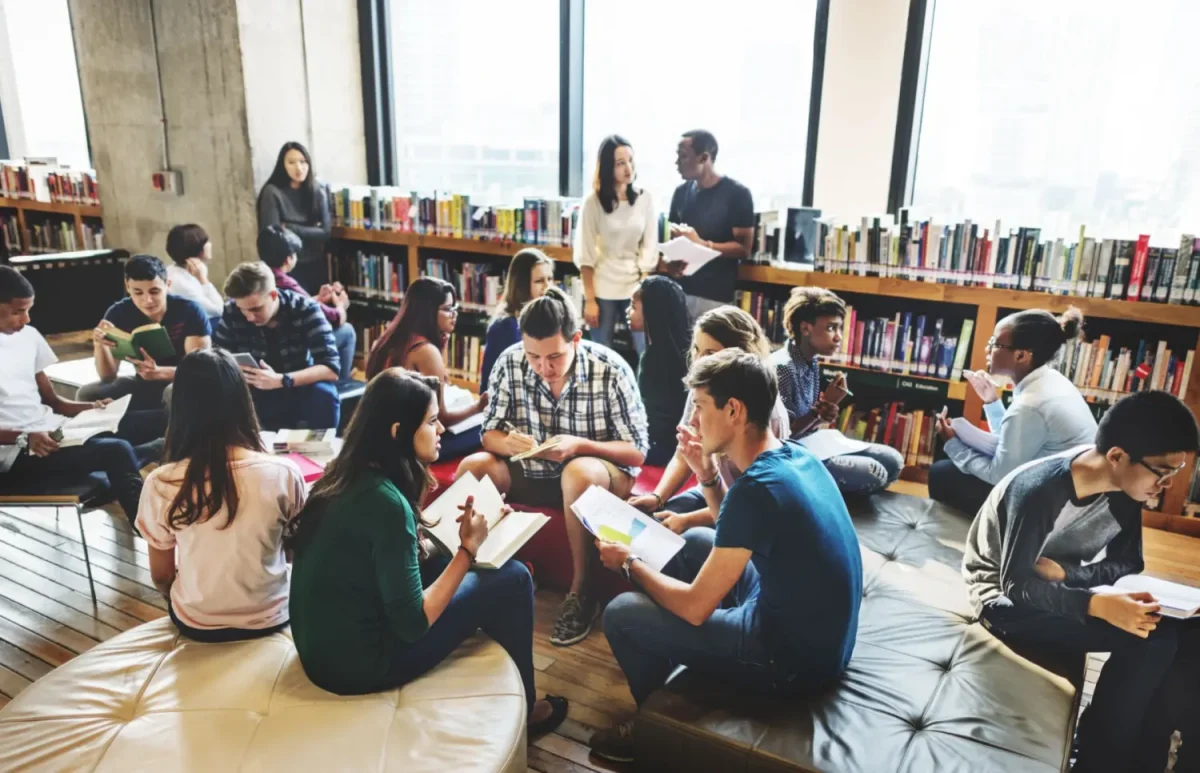
As global conflicts continue to shape headlines and political discourse, college students are increasingly confronted with a difficult question: how much is enough to know?
From ongoing tensions in the Middle East to political unrest in countries like Iran, today’s students are exposed to a constant stream of information. Yet exposure does not always translate into understanding or engagement.
At Mercy University, student responses reveal a complex relationship with global awareness, one shaped by accessibility, emotional bandwidth and trust in information sources.
“I’m not super informed, if I’m being honest,” said junior Joaquin Lopez. “Most of what I see is from social media, specifically Bluesky since I’m not on a lot of platforms. I’m a little wary about relying on one source, but I don’t really go out of my way to stay informed.”
Lopez’s honesty reflects a broader trend among young adults. With the rise of algorithm-driven platforms, news is often encountered passively rather than intentionally sought out. According to recent research from the Pew Research Center, a large portion of young adults now rely on social media as a primary news source, despite widespread concerns about misinformation and bias.
This creates a paradox: students are more connected to global events than ever before, yet often feel less equipped or less motivated to fully engage with them.
For some students, however, awareness is a conscious effort.
“I’d say I’m pretty aware of most global conflicts,” said senior Andre P. “I get a lot of information from my algorithm, but I also have a subscription to the New York Post, and I usually go back to that to verify things.”
Andre’s approach highlights a growing skepticism among students. While social media may introduce topics, traditional outlets are still used to confirm credibility. This layered method of consuming news suggests that students are not entirely disengaged, but rather navigating an overwhelming and often contradictory media environment.
Trust, however, remains inconsistent.
“I pay attention to the news, especially when it comes to what’s happening in Iran,” said senior Rene Morataya. “I try to actively look for information. Most of what I see is a mix of Instagram and Reddit. I don’t really trust Instagram, but I trust Reddit more because it feels more grounded.”
Morataya’s comment points to an interesting shift in perception. Platforms like Reddit, which rely on community discussion, can feel more “authentic” to users, even if they are not always more reliable. This reflects a deeper issue: students are not only questioning what they know, but who they trust to tell them.
Beyond sources and awareness, there is also the emotional weight of global conflict to consider.
For many students, especially those with personal or cultural ties to affected regions, global events are not distant they are deeply personal. Coverage of Iranian political unrest, for example, often highlights how members of the Iranian diaspora in the United States remain emotionally connected while navigating life far from home. According to reporting by the Associated Press, many Iranian Americans express concern not only about the conditions in Iran but also about how those issues are understood or misunderstood abroad.
This raises an important question for campuses like Mercy: what responsibility do universities have in fostering awareness, especially when global conflicts directly affect members of their community?
Students themselves seem to have an answer.
“I do think having a space on campus to talk about current events would be appreciated,” Lopez said. “As someone like me, I probably wouldn’t seek it out on my own, so having somewhere to go would be nice.”
Andre echoed this idea, emphasizing the importance of perspective.
“We have a large population of people from different places,” he said. “Outside of the classroom, you don’t really get to hear different perspectives.”
Morataya added that awareness should be encouraged, but not forced.
“A lot of people are unaware of what’s going on,” he said. “While it shouldn’t disrupt academics, people should still be informed.”
These responses suggest that students are not rejecting global awareness but rather they are asking for it to be more accessible, more structured, and more integrated into campus life in a way that feels manageable.
At the same time, there is an underlying tension between staying informed and protecting one’s mental space. Constant exposure to conflict, violence, and political instability can be overwhelming, leading some students to disengage not out of indifference, but self-preservation.
In this way, apathy is not always a lack of care, it can also be a response to overload.
Still, the desire for dialogue remains clear.
Whether through campus events, open forums, or classroom discussions, students at Mercy University are expressing interest in spaces where global issues can be explored collectively rather than individually. These environments not only promote awareness but also create opportunities for empathy, allowing students to understand how global events impact those around them.
As the world becomes increasingly interconnected, the role of the college campus may extend beyond education in the traditional sense. It becomes a place where global realities are not just observed, but discussed, questioned, and understood.
At Mercy University, students may vary in how closely they follow global conflicts, but their perspectives reveal something deeper: a shared recognition that awareness matters, even if the path to it looks different for everyone.