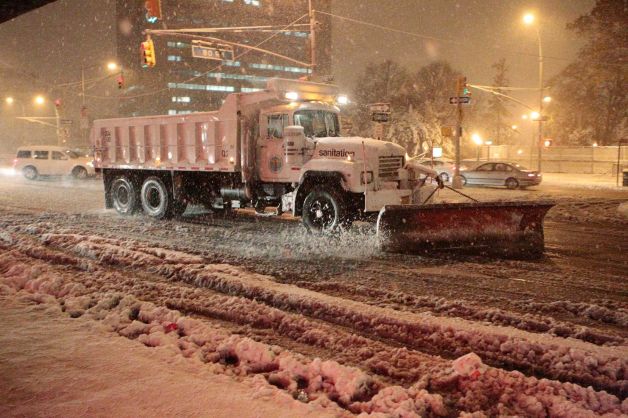
The United States has dealt with snowstorms before and everyone has had to undergo the pain that is the weather. Especially when it says on a weather app that it feels like it is negative degrees. However, no storm was as cold and brutal as the one the U.S. is facing currently. Approximately, the dates of Jan.23 – Jan. 26 of 2026 marks the start of arguably one of our worst snowstorms in history. The storm has currently resulted now in about 25 deaths, while continued in damaging recovery efforts.
It was said from the National Weather Service that there was an arctic mass blast with a substantial amount of Gulf and Pacific moisture that forced the central and southeast parts of the U.S. to go through this extreme weather. More specifically the NWS states that “Elsewhere across the country, significant snow, sleet, and ice accumulations were observed from the southern Plains through the Deep South and Ohio River Valley into the Mid-Atlantic and New England” and also stated how we had “Another period of bitterly cold wind chills followed into the morning of January 26th, with minimum wind chills between -15°F and -25°F observed across northern Illinois and northwest Indiana.”
However, the most important piece that the NWS shares on their report is that locally, the storm delivered “2 to 6 inches of snowfall to locations near and south of I-80 and east of the Fox River” during the evenings of the 24th and the 25th. But, the lake effect and enhanced snowfall produced “localized accumulations up to about 10″ in Cook County within a few miles of Lake Michigan and up to 6-9″ in parts of Lake and Porter counties in northwest Indiana.” It marks in their summary as one of the most coldest years to date, comparing it to earlier storms as well. Even in other places like Boston, they had met up to 16.7 inches of snow from January 25th-January 26th and was claimed a “new daily record” by Boston locals. Apparently, Boston’s previous record goes to as far back as 1905 with only being 9 inches of snow! More specifically, this makes the January 26th storm Bostons 9th snowiest day ever recorded.
It should be safe to say that this storm was one of the coldest in several cities. Crazy how different it is now!
On a page reflecting on the storm from Renee Straker, an editorial writer for the Weather Channel and part of the digital weather content team, wrote how there were hundreds to thousands of people that had their power affected. However, concerning the deaths specifically, she wrote, “The number of deaths is rising, with at least twelve deaths blamed on the storm. In Louisiana, two men died of hypothermia, and that was also the cause of death for a woman in Kansas and one of two deaths in Texas.”
There was even a post on Facebook from a woman named Kyra Purvis, a journalist on wpde.com, who wrote and described how “the first winter storm related death has been confirmed in SC. A 96 year- old woman was found dead with hypothermia in Greenwood Co.”, adding another death due to hypothermia at 12:50 am on a Monday. Very tragic.
It was even said that the trees are still continuing to fall, causing issues with restoration and as a result, gave more power outages. This even led the U.S. Senate to “delay a vote as a potential government shutdown looms,” according to the channel of 13WHAM ABC News.

(Credit to the National Weather Service)
This image from the NHS’s radar includes the “Regional radar loop from the morning of January 24th through the late evening of January 25th.” The radar also includes “mosaic imagery” from the courtesy of the College of DuPage, making the image of the snow storm makes it look like one roaring cold blaze that America has never seen before.
In the meantime, will America continue getting blasted with this extreme cold outside of our homes? Only time will tell, but for now it is best to try staying home and avoid the roads as much as possible from this extreme weather. As always, check for good heat in the house and be careful when driving from black ice and clean your cars as much as possible.